Tokenization Is Not Enough
RWAs hit $25.6B as treasuries, private credit, energy, and cashflows move onchain. But tokenization isn't the hard part — the real challenge is building infrastructure that lets these assets function as programmable economic systems.
Mar 11, 2026
RWAs are growing rapidly, reaching $25.6 billion at the time of writing. Treasuries and private credit are onchain, energy production and even cashflows are being tokenized while funds are being wrapped in smart contracts. This narrative suggests that tokenization is the unlock, but tokenization is not the hard part. Representing assets onchain is relatively straightforward. The real challenge is building the infrastructure that allows those assets to behave like programmable economic systems.
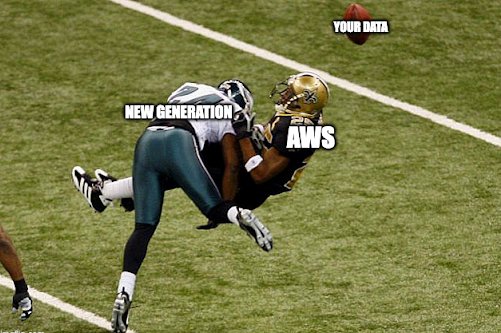
Enterprises do not migrate critical systems simply because something is marginally cheaper or marginally faster. Institutions like exchanges, financial platforms, and energy providers prioritize reliability, proven SLAs, and operational predictability as much as price or performance. For new infrastructure to replace incumbent platforms like AWS, it cannot simply match their performance, it must be significantly better. Migration requires clear advantages that justify the operational shift, and tokenization alone is not enough.
Tokenization opens the door, but it is Infrastructure that determines whether the system can actually function.
The Illusion of Completion
There is a growing assumption in the market: If it’s tokenized, it’s solved. This assumption ignores the fact that wrapping an asset in a token does not transform its economic behavior. A token can represent many things, such as a solar farm, a loan book, a commodities reserve, or even a private fund.However, representation alone does not provide the operational infrastructure required for real, robust markets. Representation does not equate to:
real-time verifiability
dynamic risk modeling
continuous performance tracking
composable economic flows
Real capital markets depend on continuous data ingestion, deterministic retrieval and reliable infrastructure. Without this layer, tokenized assets still rely on the same operational assumptions as traditional systems: periodic manual updates, centralized dashboards, private APIs and legacy (Web2) infrastructure. So in practice the token becomes an interface rather than the system itself and the result is a structural illusion: the asset appears programmable onchain while the underlying information pipeline remains centralized.

Real Economies Are Dynamic
Real-world economies are live streams, not snapshots in time. A solar farm produces energy hourly, a credit portfolio re-prices daily, collateral values fluctuate continuously, and cash flows change in real time. In other words, capital markets depend on timely information, predictable performance, and continuous recalibration. However, most tokenized RWAs today rely on:
Periodic and often manual updates
Centralized dashboards
Private APIs
Web2 infrastructure
From a composability, efficiency, and transparency standpoint, it’s a mess. From a general, yet objective standpoint, the mismatch is structural. Dynamic assets are being paired with static infrastructure, and logically, this cannot scale into a programmable capital market, which tends to be considered the biggest value proposition of tokenizing real words assets.
In a programmable capital market, systems require deterministic retrieval, high-throughput ingestion, low-latency access and predictable economic routing. For example, the intersection between crypto as capital rails and AI systems becomes more obvious as each day passes. As AI systems begin participating in capital allocation, risk modeling, and automated trading strategies, all of the requirements mentioned above become even stricter. Why? Because agents operate on data, not narratives.
Unfortunately, existing infrastructure lacks these qualities, severely handicapping RWA growth and usability. This is why, even with tokenized RWAs at all-time-highs, DeFi TVL is down 34% within the same period.
Someone in the back just yelled “What the duck are we even doing!?”, to which we’re excited to respond: solving it.
Context
The real limitation of today’s RWA stack is infrastructure. Today, much of the data powering onchain applications still lives in centralized cloud providers such as AWS S3, private databases, and proprietary APIs. The decentralized web frequently depends on centralized infrastructure to store and serve critical information. In other words, tokenized assets settle onchain, while the data that determines their value lives offchain, shining a bright light on the structural mismatch mentioned earlier in this article.
When infrastructure sits outside the ecosystem, value compounds outside the ecosystem as well. Storage fees, API request costs, and data access fees flow to centralized providers rather than the networks that depend on that data.
If data is siloed, capital is siloed and composability becomes purely a mirage; a chimera.
https://x.com/0xngmi/status/1966798227870556567?s=20
And, don’t forget it: infrastructure determines the economic potential of tokenized assets.
Do You Have a Better Alternative?
Replacing incumbent infrastructure is… difficult. Platforms like AWS built their dominance through reliability, global distribution, and operational guarantees. Enterprises trust these systems because they have been tested at massive scale. New infrastructure must therefore offer a lot more than parity. It must offer clear advantages, and these advantages have to come from multiple dimensions:
cost efficiency
verifiability
composability
throughput
Cost structure is particularly important. Many cloud providers charge per API request, creating significant operational overhead for data-intensive applications. Eliminating request-level pricing removes a major pain point for systems that rely on constant data retrieval. For startups and emerging protocols, these costs can represent a meaningful barrier to growth.
The next generation of infrastructure must therefore not only match the cloud: it must obliterate it in performance and economic terms.
Productive Capital
There is a deeper shift happening and data is rapidly becoming productive capital. From production feeds, to performance metrics, revenue streams, and even utilization rates: these are no longer simply inputs. When this data is composable, permissionless, and economically aligned, it becomes economically reusable, and every new application that builds on top of an existing dataset increases its value. Instead of siloed pipelines, ecosystems gain programmable data economies.
Data originator benefits.
Applications gain reusable infrastructure
Ecosystems compound rather than fragment
Data transitions from cost center to yield-bearing asset: a foundational shift with the potential to increase profitability for onchain protocols.
The Convergence of RWAs and AI
For AI agents to operate successfully, clean feeds, real-time inputs and deterministic performance are required. Essentially, agents operate on data, not narratives. As AI systems begin to participate in capital allocation, risk modeling, and trading strategies, their competitive advantage will depend on data access. Simultaneously, RWAs require continuous monitoring, automated risk recalibration and transparent reporting.
The convergence layer? A shared, real-time data infrastructure. AI requires it, RWAs require it and programmable capital markets depend on it.
Tokenization was phase one. Now, real-time infrastructure is phase two.
We’ve seen a tremendous increase in tokenized real world assets onchain. However, as mentioned above, tokenization alone is just representation: a static mirror for offchain systems. The last cycle was centered around this concept, from tokens, to wrappers, and synthetic exposure. But the next cycle.. The next cycle is about compounding economic systems.
Real-time capital systems
Programmable economic flows
Composable data markets
Without them, tokenized RWAs are static data. With them, RWAs become composable, fast growing, and efficient data economies.
A number of platforms are beginning to address parts of this infrastructure gap. Object storage systems such as MinIO and Wasabi aim to provide alternatives to AWS S3. Platforms like Cloudflare R2 reduce egress costs and simplify storage pricing. Specialized storage layers for AI workloads are also emerging. However, most solutions focus primarily on cost reduction or performance improvements, while the biggest opportunity lies in combining high-performance storage with verifiability, composability, and economically aligned data access.
Data infrastructure will soon stop being seen solely as a technical layer, and everyone will recognize it for what it was always supposed to be: the foundation of composable, programmable, and decentralized economies.
Disclaimer:
This content is provided for informational and educational purposes only and does not constitute legal, business, investment, financial, or tax advice. You should consult your own advisers regarding those matters.
References to any protocols, projects, or digital assets are for illustrative purposes only and do not represent any recommendation or offer to buy, sell, or participate in any activity involving digital assets or financial products. This material should not be relied upon as the basis for any investment or network participation decision.
Hyve and its contributors make no representations or warranties, express or implied, regarding the accuracy, completeness, or reliability of the information provided. Digital assets and decentralized networks operate within evolving legal and regulatory environments; such risks are not addressed in this content.
All views and opinions expressed are those of the authors as of the date of publication and are subject to change without notice.